Are you ready to experience using the driverless cars?
Who wouldn’t like to click a button, and allow her autonomous car to transport her to her parent’s house five hours away? During this time, she can sleep, work, or play with her children. That is the utopia that promises the autonomous car company.
Proponents assert that the primary benefit of self-driving cars is that there would be no more collisions, drunk driving, or traffic. It is a tempting expectation to think that one day driverless cars will drive us. But giving up control of the wheel can also be terrifying to some people.
How far are the days to come?
In some countries, self-driving cars have already arrived. In the United States and other nations, manufacturers and technology companies are conducting limited trials of vehicles without drivers along planned, hyper-restricted routes. However, the day when millions of self-driving automobiles crisscross the globe’s highways remains a long way off.
How do self-driving cars work?
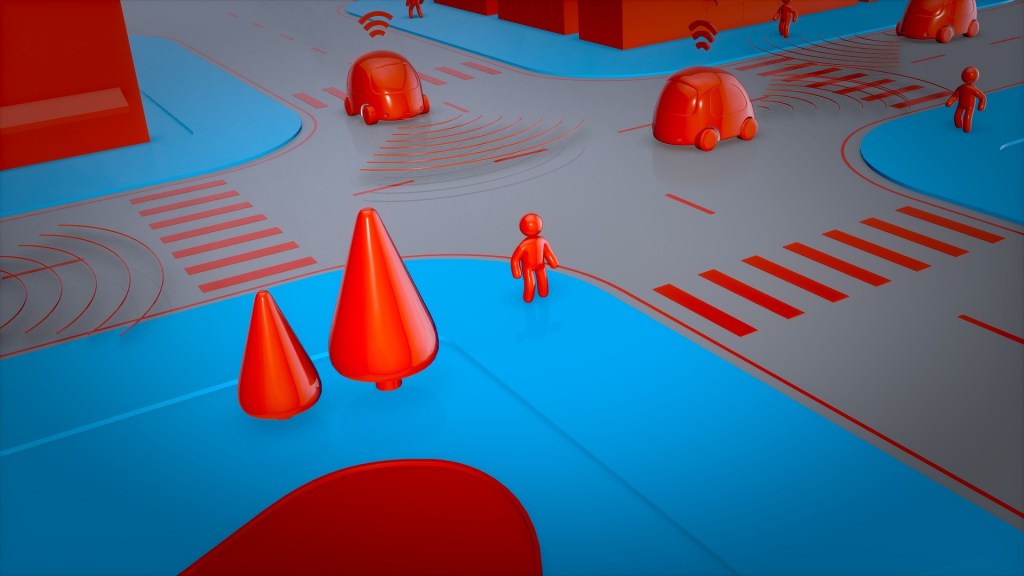
People must wonder how do self-driving cars work. Autonomous automobiles or Self-driving cars work through machine learning systems, complicated algorithms, powerful computers, actuators. Also, these autonomous vehicles collect data about their surroundings using several sensors. Thus, these radar sensors collect data on moving vehicles. They detect traffic signals, road signs, vehicles, and pedestrians. In addition, Lidar sensors use light pulses to determine distances, detect road limits, and identify lane markings.
Intuitive software sends commands to the car’s actuators. The actuator then either accelerates the speed or controls the brake and steering. Collision avoidance, forecasting, and object identification are possible with the hard-coded rule.
Self-driving car technology
Artificial Intelligence is the main technology in a self-driving car. Moreover, cameras, communication networks, and sensor technologies such as radar and lidar are all used in self-driving automobile technology.
Artificial intelligence or AI plays a major role in the development of autonomous cars. In addition, it stimulates neuron activity and assists with data processing. These features let vehicles recognizeze pedestrians, other vehicles, and traffic lights and follow pre-determined routes.
The algorithm working in a self-driving car technology
The researchers then updated an algorithm for self-driving automobiles to work with a fleet of vehicles. The first algorithm decides whether a car should change lanes depending on its safety and ability to move more quickly through traffic. The algorithm after modification enables automobiles to be packed closer together while changing lanes and incorporates a safety requirement to prevent crashes at low speeds. A second algorithm enabled the cars to detect and make space for a projected car ahead of them
Benefits of self-driving cars.
Computers eliminate human error and distractions when driving. You may fail to notice a motorcycle. The automobile’s computer does not.
- The Autonomous car has the potential to reduce road accidents. Due to the absence of human mistakes or distractions, there will be fewer accidents and casualties on the road. Many experts describe this as the primary advantage of self-driving cars.
- Liberation of the Disabled and the Elderly
Driverless automobiles will make it easier and more comfortable for the disabled and others with limited mobility to go around.
- Increased Road Speeds
Driverless cars must not travel slowly. Indeed, autonomous cars may result in increased traffic speeds, as computers will be doing the driving.
Disadvantages of driverless cars
Driverless cars have some disadvantages as well.
- The high cost of self-driving cars.
Self-driving cars would be unaffordable due to their high cost. Many average folks cannot afford to purchase such vehicles.
- Possibility of more severe collisions
Self-driving vehicles are guided by computer systems. Even a slight computer malfunction can result in more severe crashes than a human mistake.
- Privacy problems
Driverless cars would operate by utilizing your location as well as user information, posing significant privacy concerns. Hackers could gain access to the vehicle’s software and manipulate or control its operation.
- Weather-related problems
Heavy rain obstructs laser sensors positioned on the roof. Snow, on the other hand, can obstruct its cameras.
Are we moving towards a driverless future?
An autonomous automobile change is coming. Driverless future will change personal transportation in the next decade. Driverless trucks and trains are on their way.
So, what will it look like when everyone is a passenger? Drivers and garages will be less needed as automobile ownership declines.
Google self-driving car
Google initiated the Google self-driving car project in 2009 to autonomously drive ten 100-mile routes. Waymo, a self-driving technology became a subsidiary in 2016.
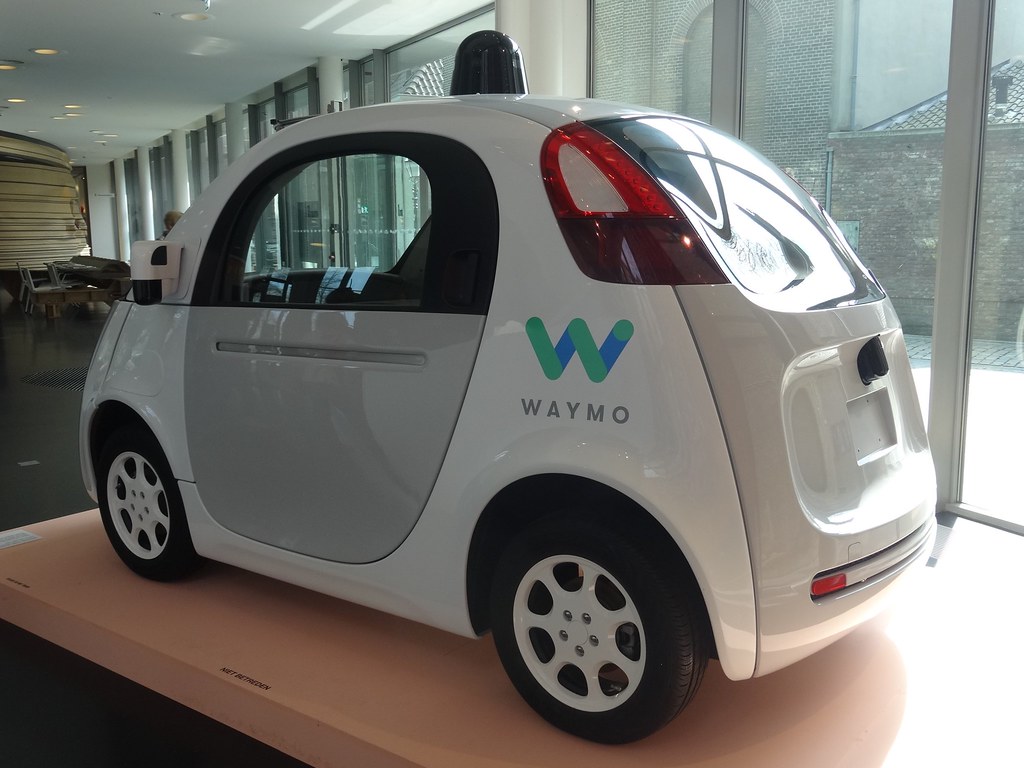
Since then, Waymo has allowed the public to participate in the first public testing of completely autonomous vehicles and has launched its first fully autonomous vehicles on public roads. Google’s self-driving cars might connect with pedestrians via robotic hands and eyes.
Autonomous car
An autonomous car can detect its environments and run autonomously without human involvement. A human passenger doesn’t need to assume control of the car at any point, nor is it necessary for him or her to be present in the vehicle at all. A self-driving car is capable of travelling everywhere a conventional vehicle can and doing all of the responsibilities normally performed by a qualified human driver.
Fully autonomous car
A human driver is not necessary for an autonomous vehicle.
The Society of Automotive Engineers has established a hierarchy of 6 levels of driving automation levels (fully autonomous). The USDOT has adopted these levels.
The SAE prefers automated to autonomous. A fully autonomous car is self-aware and can make decisions. For example, you ask for a ride to work, but the automobile takes you to the beach. It is not always. Whereas, a fully automated car would obey commands and drive itself.
Autonomous and self-driving are often interchangeable. But it’s a little different. Level 3 (automated driving under certain conditions) or Level 4 self-driving cars (high driving automation). They are geofenced. But a Level 5 autonomous automobile might go anywhere.
Driverless cars – pros and cons
Pros
CO2 emissions will be significantly reduced. In a recent study, experts identified three trends of vehicle automation, vehicle electrification, and ridesharing. If these three trends are implemented concurrently, it would enable autonomous cars to reach their full potential.
Cons
- Road system needs to redesign
A redesign of the road systems is necessary to accommodate driverless vehicles. For instance, lanes, traffic signals, and street lighting should be modified.
- Terrorist threat
Terrorists may keep explosive packs in self-driving cars and use them as moving bombs.
Another concern is that there is nobody who will be accountable if an autonomous car causes an accident. According to the newest proposals, a fully autonomous Level 5 automobile will be devoid of a dashboard and a steering wheel, rendering a human passenger incapable of controling the vehicle in case of an emergency.
Conclusion
Many drivers have driven for most of their lives and may suddenly lose that well-developed talent when they are no longer required to drive. When some circumstances necessitate the driver taking the wheel, they may overestimate their ability.




 Digiteks
Leave a comment